
The Economy Looks Strong; Why Does It Feel Fragile?
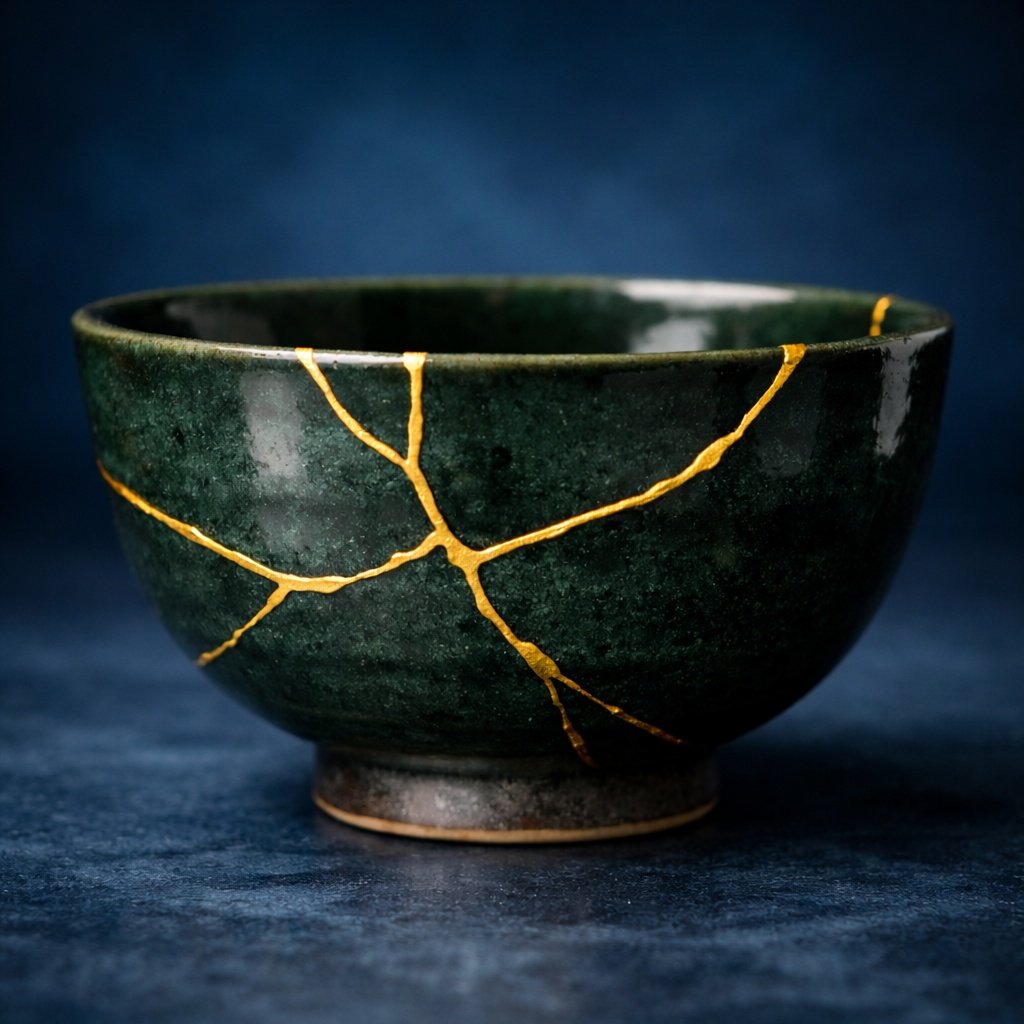
Kintsugi Bowl image created by ChatGPT
Mark Zandi, Chief Economist at Moody's, put it bluntly: "It just feels fragile to me." That assessment of the current economy captures what many of us sense but struggle to articulate. The economy is not in freefall, but the ground beneath it does not feel solid either.
I have felt this way for a while. The pandemic aid packages delivered essential short-term support, but they may have stretched the economic recovery across a longer arc than we first imagined. Economic recalibration is still underway.
To understand where we are, we need to look at two converging forces: the current economic outlook and the long-term structural challenge of federal debt. Each is serious on its own. Together, they define the current fragility. Now we are in the part of the cycle that is harder to read. Growth can look fine on the surface while pockets underneath weaken. A good dashboard can still miss the rattle you hear in the engine.
The Ground Beneath Us
Recessions are not accidents. They occur when an economy absorbs a significant shock that forces a large-scale readjustment of prices, behaviors, and expectations. The pandemic was precisely that kind of shock, and its aftershocks are still moving through the system. Inflation, interest rate adjustments, and consumer stress are not isolated problems. They are symptoms of a system still finding its new equilibrium.
The question leaders face is not whether a recession will come. History gives us certainty on that point. The question is when will it happen, how severe it will be, how long it will last, and how prepared will we be when it arrives. Leaders who treat these as rhetorical questions will be caught off guard. Leaders who treat them as planning inputs will be better positioned to protect their organizations and take advantage of the resulting disruption.
The Underlying Problem: Federal Debt
Beneath current cyclical concerns sits a structural one. The federal debt has grown from roughly $5.7 trillion in 2001 to more than $36 trillion today. That trajectory is not the result of any single administration or party. It reflects 25 years of failed leadership and self-serving decisions by leaders on both sides who chose short-term political comfort over long-term fiscal responsibility.
I have been writing about this since 2024. Others with far more financial influence, including Jamie Dimon and Ray Dalio, have raised similar alarms. The concern is not abstract. Dimon has described the debt as a slow-moving economic force with the potential to cause serious disruption. Dalio has written about the historical pattern of debt cycles ending in painful corrections. When voices like these speak with urgency, the sensible response is to listen.
The debt crisis will not solve itself. Addressing it will require a combination of spending austerity and increased revenues. Neither is popular with voters or politicians. That is precisely the problem. Doing what is is rarely easy. That is a fundamental aspect of leadership, and it is in short supply at the national level right now.
What Leaders Need To Do
Business leaders and individual citizens are not helpless. The pressure we apply on our elected officials matters. We have to demand that they have the courage to act. But we cannot wait for them. While the policy debate continues, organizations and individuals need to act.
Build recession scenarios into your planning process now. Assess the probability, the likely duration, and the potential severity based on your circumstances. Develop mitigation strategies at each level. Those who do this work will navigate the next recession with far more control than those who wait. They will also be better able to take advantage of opportunities that present themselves.
Kintsugi: Beauty in the Break
Dealing with the recessions reminds me of the Japanese art form called Kintsugi. When a piece of pottery breaks, the artisan does not discard it. They repair the cracks with gold, rendering a new piece that is often more beautiful and more valuable than the original. The break becomes part of the story.
The cracks in our economic foundation are real. The debt is real. The fragility is real. But economic history also shows us that systems can be repaired and rebuilt. The repair requires honesty about what is broken, the courage to do difficult things, and the patience to trust a process that takes time. That which is broken can become something new.
That which is broken
Can become something new, and
Better than before.
Related articles on the economy.
Moody's delivers blunt 6-word verdict on economy | The Street
Six-Chart Sunday – Blue Collar Blues | Bruce Mehlman's Age of Disruption
"A Great Depression-scale recession is coming by the end of the decade" | CTECH
Mark Cuban warns 5 key industries could crumble in the next recession | MSN
The Next Round of Layoffs Is Coming, and It'll Be Brutal | Medium
Sell America Is the New Trade on Wall Street | The New York Times
Related Articles on the Federal Debt
Record Debt in the World’s Richest Nations Threatens Global Growth | The New York Times
What happens when a country accumulates too much debt?
My earlier newsletters on the federal debt.
After 25 Years of Failed Leadership, the Bill is About to Come Due
The Federal Debt: Decades of Absent Leadership
The Federal Debt: Decades of Absent Leadership
Chips and Salsa: Bite-Sized News and Post
Over the last several decades, we have lost our ability to plan for the long term. Here is one example.
The race to power the future | Marketplace
I know several people who tried intermittent fasting to lose weight. It is important to eat better. What many attribute success to is how the body uses energy stored as fat; they overlook a critical factor. If you fast for 16 hours a day, you only have 8 hours to eat. This leads to consuming less food and fewer calories. We can all eat healthier.
We Were Wrong About Fasting, Massive Review Shows | Science Alert
There is value in physical media – permanence. Streaming platforms and our willingness to pay for subscriptions come and go. Streamers' contracts with rights holders also come and go.
Are CDs Making a Comeback? A Statistical Analysis | Stat Significant
DVDs, Blu-ray Discs, and VHS tapes are cool again | Marketplace
I wrote two newsletters that used a surfing analogy to discuss various aspects of leadership. I particularly like the line "You can't control the wave, you can only control what you do with the wave."
Surfing the Future: Leadership Riding the Waves | The Leaders Journey by Mark Rapier
One of the most important aspects of leadership growth is self-reflection. Studying what did not work and why is a common practice. Just as valuable, but much less common, is studying what worked and why.
A few interesting articles on AI.
AI could mark the end of young people learning on the job – with terrible results | The Conversation
AI’s effect on labor productivity is murkier than you might think | Marketplace
The current climate change we are experiencing is not unprecedented. The Earth has experienced several ice ages. "Life had to survive a deep freeze and the extreme hothouse conditions before and after each icy plunge." This is not an excuse for doing nothing. We need to take much better care of our home than we do.
Quotes
"Sooner or later we all sit down to a banquet of consequences."
Robert Louis Stevenson
"Reality continues to ruin my life."
Bill Watterson
"Compassion: that's the one thing no machine ever had. Maybe it's the one thing that keeps men ahead of them."
Star Trek: The Original Series S2, E24 – Thoughts on AI from 1967
Join the Conversation
Subscribe on LinkedIn, Medium, or Substack.
Leadership is the most important work we do—in business and in life. I've spent over 40 years working with leaders across more than 100 companies, and I'm still learning. These newsletters share my thoughts on leadership today and what we can learn.
I need your help making this better. What topics hit home? What misses the mark? What leadership challenges are you wrestling with right now? Send them my way.
Find The Leader With A Thousand Faces and other recommended books on my website.