

$40 Trillion Later, Still Waiting for a Plan
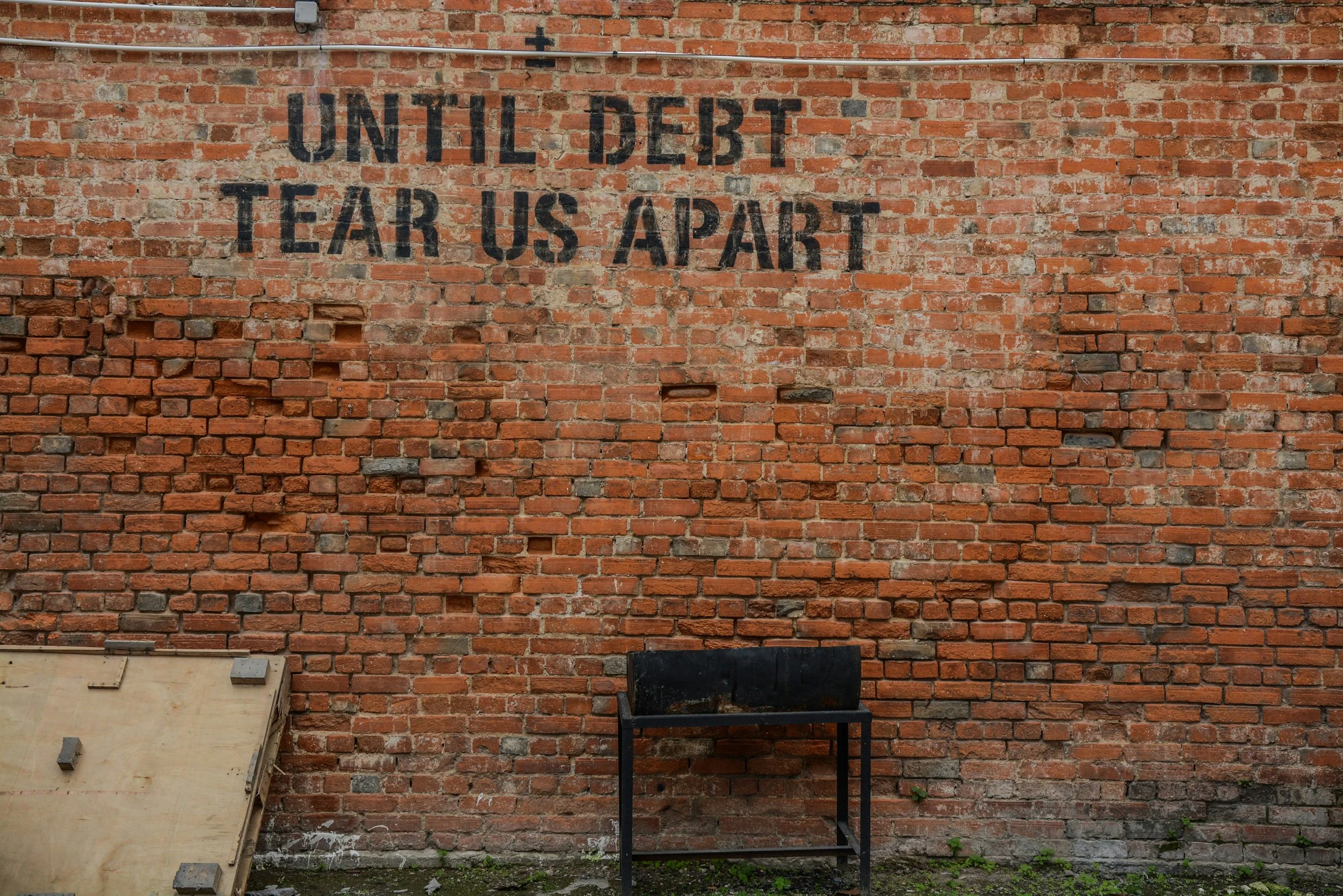
Photo by Alice Pasqual on Unsplash
The federal debt crossed $40 trillion this month, a threshold it reached just five months after passing $39 trillion in March. Interest payments on that debt now cost more than a trillion dollars a year – more than the government spends on national defense. I have written about this before. The debt keeps growing, and the trajectory has not meaningfully changed.
Two Parties, One Result
When Bill Clinton left office in 2001, the federal government had just posted four consecutive budget surpluses, the first sustained run of surpluses since the years right after World War Two. Debt held by the public had fallen from close to half of GDP to the low thirties. That fiscal position did not last. Since 2001, Republicans have held unified control of the White House, House, and Senate for roughly eight of the last twenty-five years. Democrats have held that same unified control for four. Neither party, in its years with full control, used the opportunity to bring spending and revenue back into balance. The debt has grown by more than $11 trillion since 2017 alone, doubling in less than a decade. In May 2025, the United States lost its last AAA credit rating when Moody’s downgraded federal debt, citing the growing gap between spending and revenue.
This is not a story about one administration outspending another. A recent comparison of debt growth across the last four presidents found double-digit trillions added under Republican and Democratic control alike, driven by a mix of wars, recessions, pandemic relief, and tax policy. Twenty-five years, four presidents, control of Washington changing hands repeatedly, and the fiscal trajectory never changes.
What Happens If We Get This Wrong
The size of this debt raises questions worth sitting with rather than dismissing. What happens if competition among bond investors pushes interest rates higher, and a higher-rate environment feeds inflation for years instead of months? Investor Ray Dalio has spent the last several years describing what he calls the big debt cycle, the pattern by which heavily indebted countries eventually lose the ability to manage their obligations through ordinary means.
What happens if the government pursues real austerity, pulling meaningful spending out of an economy that has grown dependent on it?
What happens if the dollar loses its position as the world’s preferred reserve currency, the status that lets the United States borrow more cheaply than almost any other country?
What happens if the United States, at some point, cannot meet its obligations at all?
None of these are predictions. They are the kinds of questions a responsible leader asks before a crisis forces the answer, not after.
What Needs to Change
The first step is admitting that trickle-down economics has not delivered what it promised. A London School of Economics study spanning fifty years of tax cuts for the wealthy across eighteen countries found no meaningful boost to growth or employment, only a widening gap in income inequality. That finding does not mean the debt problem gets solved by taxing billionaires. American billionaires held roughly $8 trillion in combined wealth in 2025, close to a fifth of the total federal debt. Redirecting all of it toward the debt would help once and then be gone. A problem this size needs revenue that exceeds spending for a decade or more, sustained across multiple administrations and congresses of both parties, not a single dramatic transfer.
That kind of sustained discipline is rare in American history. Since World War Two, the federal government has run a balanced budget twelve times in the past eighty years. Truman and Clinton’s were responsible for seven of the surplus years. Getting there once is difficult. Getting there and staying there for a decade or more, surviving multiple elections and multiple parties in power, would be unprecedented in the modern era.
We have reached one of those points where management stops being enough. The path forward requires something closer to real transformation. Our federal debt is that kind of moment. Whether Washington treats it that way is still an open question.
Debts do not vanish. Someone always pays the price; bills always come due.
Related Articles
How Big Is the $40 Trillion National Debt, Really? | CNN
Opinion: The $40 Trillion Debt Milestone and a Shaky Fiscal Foundation | The New York Times
How the $40 Trillion Debt Grew Across Recent Administrations | Newsweek
A Deep Dive Into the US National Debt Milestone | Tangle News
World Facing Its Biggest Credit Crunch in History | The Independent
How Countries Go Broke: The Big Cycle | Ray Dalio, LinkedIn
US National Debt Nears the $40 Trillion Mark | ABAB News
Tax Cuts for the Rich Increase Inequality, Study Finds | World Economic Forum
Keeping Taxes Low for the Rich Does Not Boost the Economy | LSE
US Billionaires Got $1.5 Trillion Richer in 2025 | Yahoo Finance
US Government Debt Passes $40 Trillion, More Than Doubling in a Decade | CNBC
US Debt Set to Hit $40 Trillion Months Earlier Than Expected | The Washington Post
US Billionaires Got $1.5 Trillion Richer in Trump’s First Year | Americans for Tax Fairness
My Earlier Newsletters
The Bill Nobody Wants to Pay: America’s Debt Crisis | Mark Rapier
The Economy Looks Strong. Why Does It Feel Fragile? | Mark Rapier
After 25 Years of Failed Leadership, the Bill Comes Due | Mark Rapier
An Example of Poor Analytics on the Federal Debt | Mark Rapier
Beyond the Unthinkable: Strategic Planning for Existential Risk | Mark Rapier
Chips And Salsa: Bite-Sized News and Posts
This commentary saddens me. I fear many will be very lonely in their later years.
Female Earnings and the Rising Risk of Separation | The Hill
The reality of making predictions is that the best we can do is be directionally correct.
We Are Spectacularly Bad at Predicting the Future. Ignore the AI Hype and Fear | Big Think
When Is Stereotyping a Handy Tool, and When Is It a Sin? | Aeon
Tech vendors keep thinking that we want constant surveillance masked as sharing. They don’t seem to listen much.
Why Apple’s Controversial New AirPods Could Get Banned in Offices and Gyms | Inc.
From Outcry to Acceptance: The Evolution of Digital Surveillance | Mark Rapier
Calvin and Hobbes, Far Side, and Bloom County are among my favorites.
Ranking the Greatest Calvin and Hobbes Comic Strips of the 1980s | MovieWeb
Quantum is coming. Be prepared.
Quantum Computing: The Inflection Point We Can See Coming | Mark Rapier
I am not optimistic about the success of the Paramount–Warner Bros. Discovery merger. The debt load seems so high.
The War Over Warner Bros. Is Splintering Hollywood’s Labor World | The Hollywood Reporter
Oracle Junk Bond Fears and Debt Surge Sound Alarms for Investors | TheStreet
The psychological reason we don’t follow our own advice.
The pandemic broke our habit of going to the movies. Cost has kept us from returning on a regular basis. Two tickets, drinks, and popcorn cost as much as a dinner out.
Why We Stopped Going to the Movies | Stat Significant
I am addicted to golf. I’m a dork about it. These two articles are examples.
The Truth About Golf Swing Tempo: A Yale Professor’s Fascinating Lecture | Golf Digest
Quotes
"Our lives are defined by opportunities, even the ones we miss."
Eric Roth
“Practice puts brains in your muscles.”
Sam Snead
“Make failure your teacher, not your undertaker.”
Edward R. Murrow
Join the Conversation
Subscribe on LinkedIn, Medium, or Substack.
Leadership is the most important work we do—in business and in life. I've spent over 40 years working with leaders across more than 100 companies, and I'm still learning. These newsletters share my thoughts on Leadership today and what we can learn.
I need your help making this better. What topics hit home? What misses the mark? What Leadership challenges are you wrestling with right now? Send them my way.
I use AI to enhance my writing. All of the ideas, recommendations, and opinions are mine. To read about my process for leveraging AI, please read this newsletter.
Find The Leader With A Thousand Faces and other recommended books on my website.