
Leadership Lessons From The General Who Built An Army
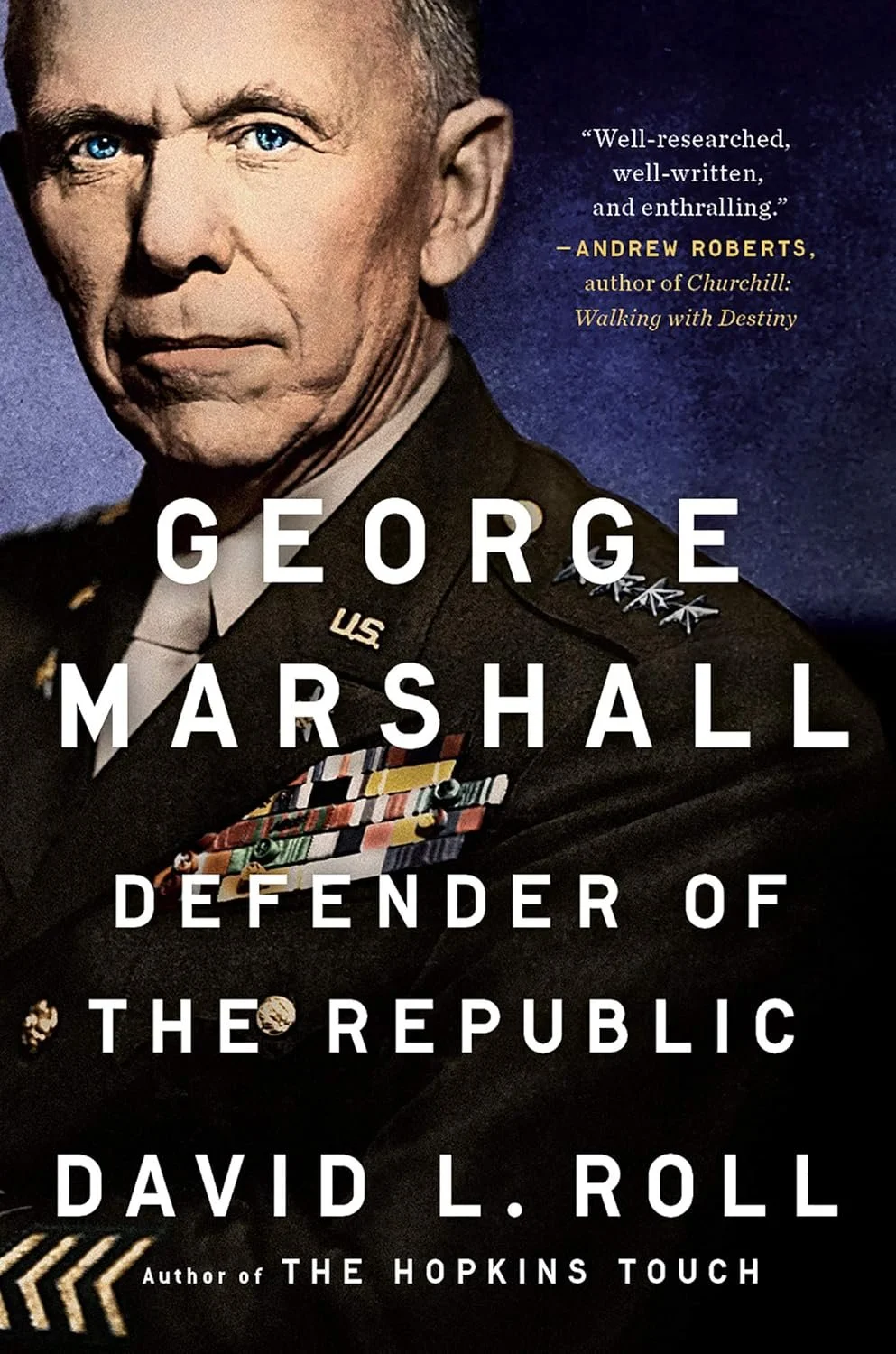
History teaches us leadership in ways no academic textbook can. David Roll's biography, George Marshall: Defender of the Republic, offers three lessons that matter as much today as they did during World War II.
George Marshall was one of the central figures of World War II—and the Cold War—yet he never commanded troops in battle. His influence came through intelligence, judgment, character, and a willingness to say what leaders needed to hear, not what they wanted to hear.
Speaking Truth To Power With Respect
During World War I, then-Captain Marshall watched General Pershing criticize his division commanders during a training exercise. As Pershing turned to leave, Marshall did something most junior officers would never consider. He stopped him. Marshall pointed out that the real problem wasn't the division's performance but the inadequate resources Pershing's own staff had provided. He was clearly angry but based his feedback on facts, not emotion. The division couldn't execute properly because it lacked the tools to succeed. Pershing became a mentor and one of Marshall’s greatest advocates.
Years later, Marshall repeated this pattern in the White House. In a 1938 meeting, senior leaders aligned around a plan. President Roosevelt asked Marshall if he agreed. He said no. He explained why, calmly and directly. A short time later, Roosevelt promoted Marshall to Army Chief of Staff over dozens of more senior generals.
Seeing Tomorrow, Acting Today
From 1927 to 1932, Marshall served as assistant commandant at Fort Benning's Infantry School in Georgia. On paper, this looked like a sideways move. Marshall saw it as an opportunity to prepare the Army for the future.
As head of the Academic Department, Marshall controlled what senior officers learned. He recognized that tactics from World War I wouldn't work in the next conflict. The trench warfare that defined the Great War had already become obsolete. Future battles would require speed, coordination, and initiative at lower levels of command.
Marshall revolutionized the curriculum. He selected innovative instructors who understood modern warfare. He created exercises that forced officers to make decisions under pressure. He prepared them for challenges that hadn't yet arrived but that he knew were coming.
The officers Marshall trained at Fort Benning became the generals who led American forces across Europe and the Pacific. They knew how to adapt because he taught them how to think, not just what to do.
Recognizing and Keeping Track of Talent
Marshall kept a "black book" of officers he believed had potential. During his time at Fort Benning, he observed hundreds of young officers in training. He noted who showed initiative, who kept calm under pressure, and who could learn from mistakes. He trained over 200 future generals, including Eisenhower, Patton, and Bradley.
He didn't just teach tactics. He observed character, judgment, and adaptability under stress. He looked for officers who could handle responsibility beyond their current rank. He identified people who would excel at levels they hadn't reached yet.
President Roosevelt showed the same exceptional judgment in his personnel decisions. He promoted Marshall from one star to four stars, passing over dozens of more senior officers. After Pearl Harbor, he promoted Chester Nimitz to Commander in Chief of the Pacific Fleet ahead of 28 more senior admirals, jumping him from two stars to four. Both men later became five-star generals.
Both Marshall and Roosevelt understood that past performance is not always a predictor of future potential. They looked beyond seniority systems and political pressure to find people who could handle challenges no one had faced before.
Later in the war, when Roosevelt offered Marshall command of the D-Day invasion, Marshall faced a choice. Leading the largest amphibious assault in history would fulfill a lifelong ambition. Marshall left the decision to the president. Roosevelt gave Eisenhower the assignment, later explaining to Marshall: "I didn't feel that I could sleep at ease if you were out of Washington." He deemed Marshall's talent for organizing logistics, managing resources, diplomacy mattered more as Chief of Staff than it would have in the field.
What We Carry Forward
After retiring from the Army, Marshall became Secretary of State and later Secretary of Defense. His Marshall Plan rebuilt Europe's economy after the war. He earned the Nobel Peace Prize in 1953, the only professional soldier to receive that honor.
Even those who disagreed with the policies of the presidents he served respected his honesty and integrity. He turned down lucrative offers to write his memoirs. He believed public servants should serve the public, not profit from their service.
Looking Beyond The Legend
Roll's biography maintains a balanced view throughout. He reconciles conflicting accounts from contemporary sources and memoirs published years later. When different witnesses remember the same event differently, he explores the inconsistencies rather than hiding them. He points out where Marshall could have been more effective, particularly in his attempts to negotiate peace in China after World War II.
Historians bring perspectives that shape how we understand these stories. "Defender of the Republic" clearly admires Marshall, but it doesn't ignore complexity or contradiction. Roll shows us a real person who made mistakes, not a bronze statue.
The lessons survive because they're practical. Speak truth backed by facts, not opinion. Build for tomorrow while managing today's urgent needs. Develop talent that will outlast you and accomplish things you never will. Accept that leadership means serving something larger than yourself.
These principles don't require genius or exceptional circumstances. They require courage to act when staying silent feels safer, vision to prepare for futures others do not yet see, and humility to recognize talent wherever it appears. Marshall showed us that ordinary people can achieve extraordinary results when they commit to these fundamentals.
Related articles
Five-Star Generals and Admirals | Arlington National Cemetery
The Genius Decision That Won World War II | Standing For Freedom
Character Traits Strategic Leaders Need | Army War College
Chips And Salsa: Bite-Sized News and Posts
It was cold a week or so ago. Here’s why.
How the polar vortex and warm ocean intensified a major US winter storm | The Conversation
I never agreed with Mark Zuckerberg's quote, "Move fast and break things. Unless you are breaking stuff, you are not moving fast enough." I prefer controlled speed with fewer mistakes. This article's author’s only real error was not sending weekly status reports. Perhaps the supervisor could have coached the team if the data had been readily available.
They Worked Weekends. I Didn't. I Knew I'd Get Passed Over for Promotion. | Medium
Generative AI is still an emerging platform with great potential. We still need to understand the risks. One risk is customer resistance. No matter how technically sound a solution may be, if our customers (internal and external) do not embrace it, it is not a resolution.
More Americans concerned about AI, even as it drives economy | Marketplace
An interesting perspective on why things are the way they are.
The Weird Reason Clocks Count to 12 | Medium
AI will unwind more slowly than many think. Part of the unwinding will be redefining the term Artificial Intelligence. It is neither artificial nor intelligent. We will arrive at a point where we treat AI as an incredibly effective tool, not a human replacement.
Why AI has not led to mass unemployment | The Conversation
AI will continue to disrupt how we work. To date, many responses have been reactive. We need to get much better at predicting the direction of disruption.
Battle for the Interface: Introducing the Consumer AI Disruption Index | Boston Consulting Group
I am so glad coffee is good for me!
Drinking coffee can add years to your life—but only if you do this, research shows | Fast Company
The Java Jive - The Ink Spots
Quotes
“Never neglect details. When everyone's mind is dulled or distracted, the leader must be doubly vigilant.”
Colin Powell
"Strategy without tactics is the slowest route to victory. Tactics without strategy is the noise before defeat."
Sun Tzu
"It is infinitely better to have a few good Men, than many indifferent ones".
George Washington
Join the Conversation
Subscribe on LinkedIn, Medium, or Substack.
Leadership is the most important work we do—in business and in life. I've spent over 40 years working with leaders across more than 100 companies, and I'm still learning. These newsletters share my thoughts on leadership today and what we can learn.
I need your help making this better. What topics hit home? What misses the mark? What leadership challenges are you wrestling with right now? Send them my way.
Find The Leader With A Thousand Faces and other recommended books on my website.