
Reimagining The Electric Grid: An Inflection Point is Approaching
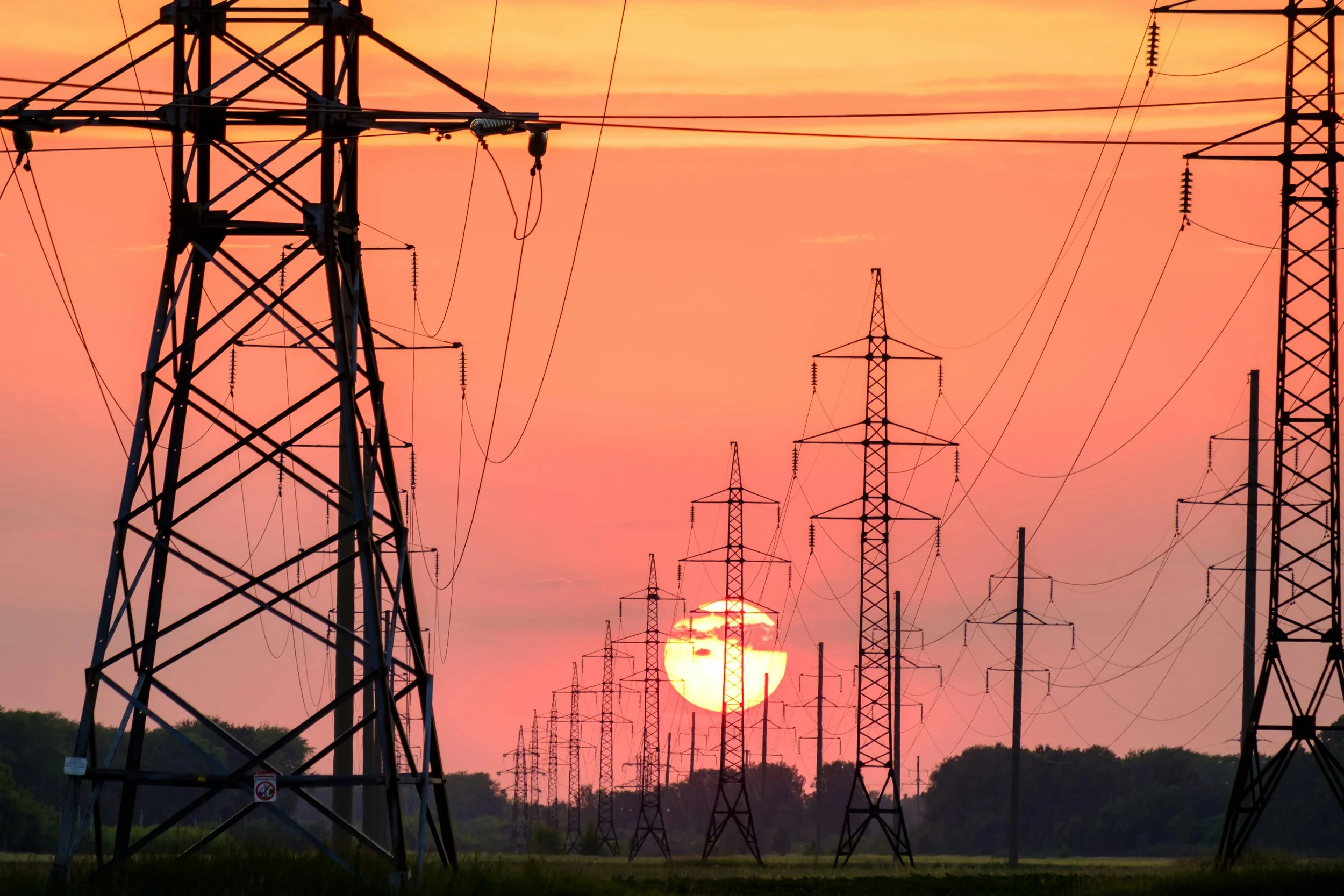
Photo by Andrey Metelev on Unsplash
The Electric Grid: An Inflection Point Is Approaching
In 1895, the Niagara Falls Power Company proved something that most engineers doubted: alternating current could be transmitted efficiently over long distances. Within a few years, that power fueled the City of Buffalo, enabling it to become one of the most economically vibrant industrial cities in America. The grid we rely on today descends directly from that moment. And it is showing its age.
We have spent 130 years building a system designed around one organizing principle: generate power in very large quantities, transmit it over long distances, and deliver it to end users who have no other choice. That model worked remarkably well for most of the 20th century. The evidence suggests it is being outpaced by the demands of the 21st.
A Demand Problem That Isn't Going Away
Global electricity consumption grew by 4.3% in 2024, according to the International Energy Agency. That figure is well above global GDP growth and represents the largest single-year increase in electricity demand outside of post-recession rebounds. Data centers are a meaningful part of that story. Gartner projects that data center electricity demand will double by 2030, driven by AI workloads that consume power at rates conventional servers never approached. More recent data suggests that even the 2025 projections have been revised upward.
The grid was built to serve homes, factories, and businesses that consumed power at predictable rates. The grid was not built for hyperscale data centers that draw power around the clock at levels that can rival those of a small city. And it needs that power reliably, without interruption, every hour of every day.
The Large Plant Challenge
The backbone of our power system, large generation plants, faces two compounding challenges. The first is efficiency. From the moment fuel enters a power plant to the moment electricity reaches your outlet, more than half the original energy is gone, lost as heat during generation, in transmission lines, and at every transformer along the way. That was an acceptable cost when power was cheap and demand was predictable. Neither condition fully applies today.
The second problem is the average age of grid infrastructure in the United States. Transformers, transmission lines, and distribution systems are operating at or beyond their original design lifespans. The SEPA report on grid modernization and the Maddox analysis of transformer demand both document what practitioners already understand: the infrastructure deficit is real and growing.
Large plants are not going away. They will remain essential for generations. The honest question is whether they can grow fast enough and be maintained reliably enough to meet a demand curve that continues to steepen.
The Small Grid: A Revolution With Limits
The residential energy movement — rooftop solar, home battery storage, small generators — represents a genuine shift in how we think about power. For the first time in the history of the grid, individual consumers have meaningful options for reducing their dependence on the centralized system. That is not a small thing.
But the economics of individual adoption remain stubborn. High upfront costs, liens on homes after solar installation, and the complexity of navigating utility interconnection requirements all slow adoption. Surveys show consumers are interested in rooftop solar but see real barriers to actually getting there. In Germany, balcony solar installations are booming, offering a simpler, lower-cost entry point. Similar approaches are worth watching here.
Battery walls offer promise as storage technology matures. But most residential systems are still designed as backup solutions rather than alternatives. The ROI case for full residential independence has not yet closed. It is important to distinguish between what is technically possible and what is practically achievable at scale.
The Medium Grid: Where the Real Opportunity Lives
Between the large centralized plant and the individual rooftop panel, something interesting is taking shape. Call it the medium grid — energy self-sufficient industrial campuses, reimagined critical infrastructure, and mid-scale renewable installations that generate and store power on-site for the facilities that need it most.
Hospitals, wastewater treatment plants, and emergency shelters are logical early candidates. These facilities cannot afford extended outages, and the performance record of diesel generator backup systems during major weather events like hurricanes, polar vortex storms, and wildfires has been uneven. A large battery storage system paired with on-site renewable generation offers something diesel cannot: fuel independence and lower long-term operating costs.
The commercial real estate angle is underappreciated. Solar installations on parking structure rooftops and small wind turbines integrated into parking lot lighting, approaches similar to what Detroit Metro Airport has piloted, change the economics of mid-scale power generation in ways that are not practical at the residential level.
Several companies are working at this layer of the grid. Open Origin, Intersect Power (a Google subsidiary), Energy Vault, Faraday Microgrids, and GE Vernova are each approaching the problem from different angles. None of them has the full answer yet. Collectively, they are building the vocabulary of what the medium grid could become.
Reimagining the Grid, Not Just Patching It
The larger shift required here is conceptual. The grid we have is a distribution system. The grid we need is a load-balancing system. That is not a minor engineering adjustment. It is a different set of design principles applied to the same physical infrastructure.
In a load-balancing model, medium grids operate as self-sufficient islands under normal conditions. But when a hurricane makes landfall or a polar vortex drives demand to dangerous levels, those local reserves can be redirected into the broader network to prevent the kind of cascading failures that leave vulnerable populations without power for days. The grid becomes a mutual aid system rather than a one-directional pipeline.
Getting there will require a level of collaboration that the energy sector has not needed before. Regulators at the federal, state, and local levels will need to update frameworks and building codes were written for a different era. Utilities, transmission and distribution operators will need to rethink long-standing business models. Hyperscale technology companies, which are both major consumers and increasingly major investors in energy infrastructure, will need to engage with regulatory processes that move at a very different pace than their product cycles. A Politico analysis from May 2026 captured that tension well, noting that tech companies are now navigating a regulatory world that utilities have dominated for more than a century.
Add to that list: smartmeter and grid software companies, EV charging network operators, insurance and reinsurance markets that price grid resilience risk, the academic institutions doing the underlying engineering research, labor unions whose members build and maintain the physical infrastructure, and the cybersecurity community protecting a network that is increasingly software-dependent. The time to begin this reinvention it is not when the medium grid reaches critical mass — it is now.
The Map Is Not the Territory
There is a temptation to view the energy transition as a technology problem. Build enough solar, install enough batteries, modernize enough substations, and the grid will take care of itself. That framing misses something important. The grid is not a collection of components. It is a system, and systems require architecture.
Every stakeholder group in this conversation has a mental model of what the grid should do. Those models were built in different eras, for different purposes, and they often conflict. Utilities optimize for reliability and rate recovery. Tech companies optimize for speed and scale. Regulators optimize for consumer protection. None of those objectives is wrong. The difficulty is that they have never had to be fully reconciled, because until recently the grid was not under this kind of pressure.
The inflection point is not a distant possibility. It is an imminent condition that most institutions have yet to recognize.
Old wires carry the load.
The future needs new ways,
To balance the grid.
Related Articles
• The Hydropower of Niagara Falls | Niagara Falls USA
• Global Energy Review 2025: Key Findings | International Energy Agency
• Data Center Electricity Demand to Grow 16% in 2025 and Double by 2030 | Gartner
• Electric Grid Continues to Show Its True Colors | NPGA
• Increased Transformer Demand and Aging Grids | Maddox
• Energy Loss and Grid Efficiency | Stanford University
• How an Aging Grid, AI, and Electrification Are Impacting Energy Rates | Veckta
• Modernization Without Disruption: The New Mandate for Utilities | Schneider Electric
• Voters Are Interested in Rooftop Solar but See Barriers to Personal Adoption | Data for Progress
• Balcony Solar Is Booming in Germany | Euronews
• Ethanol Plan, Solid Carbon Wind Power, and Thermal Battery | Autonocion
• CATL Solid-State Battery: Two Chemistries | Autonocion
• Sodium Battery and the Chinese Grid | Autonocion
• Switzerland FlexBase Underground Battery | BGR
• Buoy Energy and the Spanish Grid | Autonocion
• What Is an Energy Park? | Energy Innovation
• Blackout Statistics | Sunergy Hub
• The Multibillion-Dollar Problem with Old Leaky Oil Wells | Marketplace
• How Big Tech Learned to Speak FERC | Politico
• The Aging US Power Grid: Navigating Toward Modernization | SEPA
• Grid Transformation Explained | YouTube
• Charles Handy on The Second Curve | YouTube
Chips And Salsa: Bite-Sized News and Posts
Good ideas can become bad policy when you fail to consider downstream effects.
A Flawed Minimum Wage Study Shows How Bad Stats Become Policy Gospel | Reason
Paul Krugman wrote an interesting piece that questions the viability of Elon Musk's businesses. One cannot question his engineering capabilities or his ability to raise capital. We can question whether, overall, he builds companies of lasting value.
Questioning the Long-Term Value of Elon Musk's Companies | Paul Krugman Substack
The political and cultural ideas explored in this article are all valid. What is missing are the geographic realities that help shape the outcomes: fresh water and natural resources are two.
Why China Got Rich and India Didn't | David Oks Substack
People are nervous. Here are some reasons why.
Six Chart Sunday: Why Are Americans Anxious? | Bruce Mehlman Substack
I like this idea. Many posts are kept active because people fail to close them — that is just lazy. Many others are active to maintain a current list of 'just in case' resumes on hand, which borders on mean because people who need a job waste their time and effort.
New York Passed a Bill Aimed at Halting Ghost Jobs | HR Dive
There is no shame in using AI to help us write better. There is shame in allowing AI to write for us.
The Obvious Ways to Spot Someone Secretly Writing with AI | Medium / The Daily Draft
I have always felt sorry for people who feel the need to prove themselves with status symbols. Be comfortable in your own skin. Buy things you like because you like them, rather than for what you hope other people will think.
With Status Symbols, Let Someone Else Do the Bragging | Kellogg Insight
The most important meetings are often the ones that happen fifteen minutes before and after the scheduled meeting.
The Presentation You Never Prepare For That Matters More Than Any Deck | Medium
Cattle drives helped create the myths and legends of the American West.
Charles Goodnight | Texas State Historical Association
Science and Philosophy
Understanding how we might communicate with aliens helps reveal the nature of human language.
Why Alien Languages Could Be Far Stranger Than We Imagine | Aeon
The more we understand the realities of our universe, the more amazing the initial act of creation becomes.
The Big Bang: Space Itself Expanding Everywhere at Once | Space Daily
This is really cool. I still remember the news story when the Voyager probes were launched.
Voyager 1: Launched in 1977, Still Flying 49 Years Later | 19FortyFive
Entertainment and Humor
Even when flipping pancakes, you can get in a workout.
The Far Side: Best Food Comics | MovieWeb
It is possible to look for too much meaning in things. Maybe Ferris Bueller's Day Off is just supposed to be fun. The author wondered why there wasn't a sequel. I believe there was: Office Space.
Ferris Bueller's Day Off: 40 Years On | Fanfare
There is value in prestige productions. There is value in simple entertaining content. If you make good content, people will watch. I do fear that Paramount/WBD — if the merger ever goes through — will be forced to produce mostly cheap, forgettable programming. The debt load appears suffocating.
Is TV's Big-Budget Era Over? | Stat Significant Substack
Quotes
"A dream doesn't become reality through magic; it takes sweat, determination, and hard work."
Colin Powell
"Nothing really worth having is easy to get."
Aisha Tyler
"Those who are happiest are those who do the most for others."
Booker T. Washington
Join the Conversation
Subscribe on LinkedIn, Medium, or Substack.
Leadership is the most important work we do—in business and in life. I've spent over 40 years working with leaders across more than 100 companies, and I'm still learning. These newsletters share my thoughts on leadership today and what we can learn.
I need your help making this better. What topics hit home? What misses the mark? What leadership challenges are you wrestling with right now? Send them my way.
I use AI to enhance my writing. All of the ideas, recommendations, and opinions are mine. To read about my process for leveraging AI, please read this newsletter.
Find The Leader With A Thousand Faces and other recommended books on my website.