
When Winning a Deal Can Become a Curse
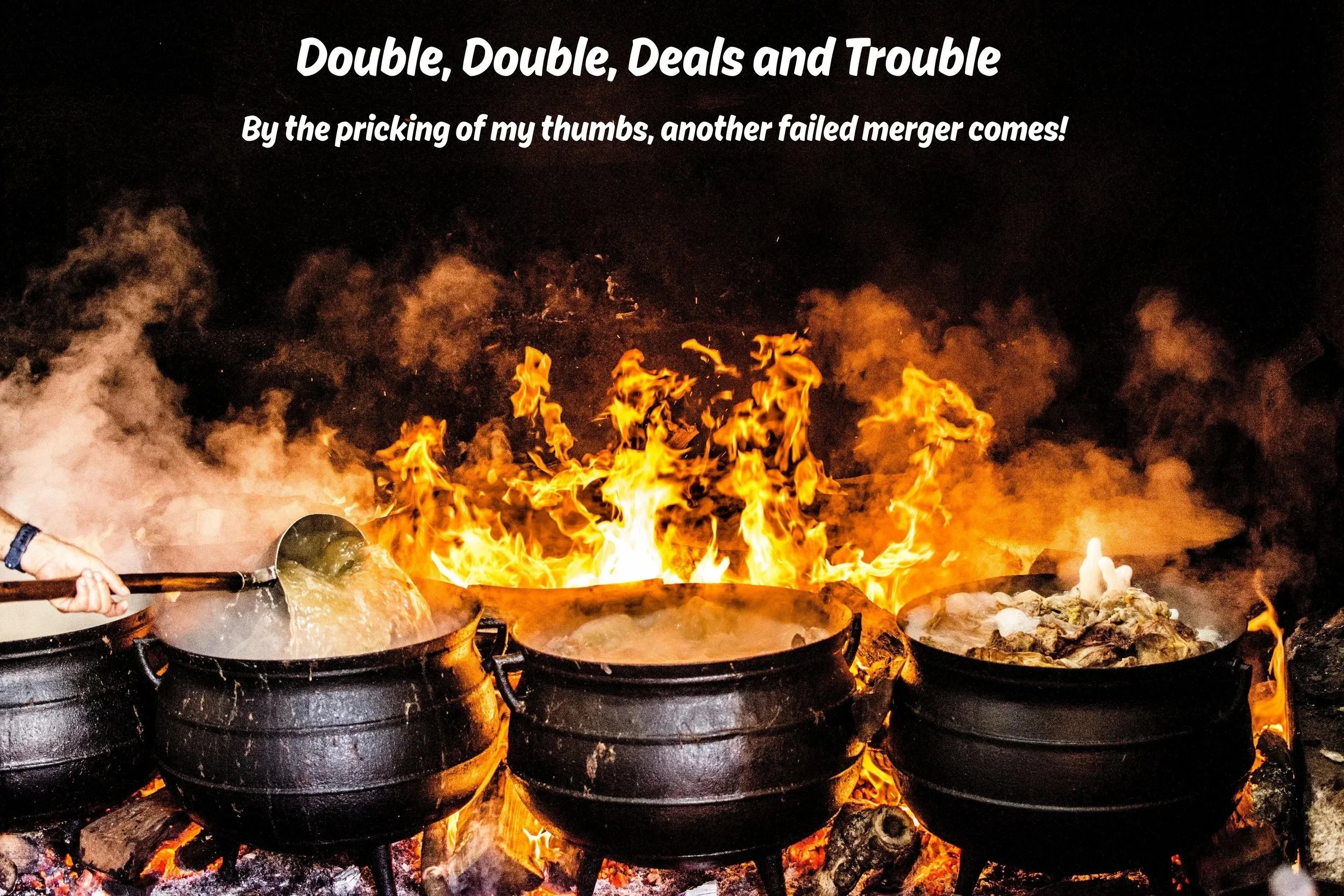
Photo by Kyla Rose Rockola via Pexels
NPR's Planet Money recently told the story of the Warner Bros. curse, a pattern that repeats so reliably you could almost set your calendar by it. Warner Bros has merged with multiple companies over recent decades—Discovery, AT&T, Time Warner—each time promising synergies and market dominance that would justify premium valuations. Each time the stock price fell, creating a curse that seemed almost supernatural in its consistency.
History provides overwhelming evidence that should give any board pause. Fortune Magazine's research analyzing 40,000 acquisitions over 40 years shows 70-75% fail to meet their stated objectives. That's not a rounding error or bad luck with timing. It's a systemic failure in how leaders approach these consequential decisions. To be fair, failing to meet pre-deal expectations does not make an acquisition a bad deal. It means the expected growth or the time to complete the integration costs more and takes longer than expected. There is still value, not as much as predicted, which probably means the buyer overpaid.
We know the usual suspects, and business schools teach them as cautionary tales to every MBA class. Cultural clashes between companies that operate like oil and water are near the top of every list of deal killers. The Daimler-Chrysler merger stands as the textbook case: methodical German engineering culture crashed into freewheeling American car making, and neither side would bend. Within a decade, Daimler sold 80% of Chrysler for $7 billion, eating a $20 billion loss that should have been predictable.
Poor integration planning leaves deals understaffed, rushed, and poorly tested, damaging customer relationships almost immediately. M&T Bank's 2022 acquisition of People's United led to system crashes that locked customers out of accounts for days. The bank knew integration would be complex, yet they moved forward anyway under pressure to complete the transaction on schedule.
Unrealistic expectations turn paper promises into market disasters when competitors don't cooperate, and customers make their own choices. Novell bought WordPerfect in 1994, believing desktop dominance would naturally follow from combining leading applications. Competitors responded with better products, customers chose Microsoft Office, and the acquisition hemorrhaged value until Novell sold WordPerfect for a fraction of what they paid.
But these obvious causes miss deeper blind spots that determine outcomes before contracts are signed and lawyers start negotiating.
The Incentive Problem
Corporate development teams get paid to close deals, and their rewards are largely based on completed transactions rather than long-term results. The deal thesis lays out future performance milestones and synergy targets. These are based on assumptions and market predictions, often without adequate risk review.
C-suite leaders face similar pressures from boards demanding visible growth and measurable progress against strategic objectives. Board-approved targets set expectations that can only be met through a combination of organic growth and acquisitions. Organic growth takes longer and has a less immediate impact. Missing performance goals costs real money in lost bonuses and stock options. Saying "we walked away from acquisitions because the valuations didn't make sense" sounds like failure to boards conditioned to expect deal flow.
The Ego Trap
Once a deal gets announced with press releases and analyst calls, walking away requires public admission that the initial thesis was flawed. Investment bankers, consultants, and executives have told boards and analysts that this deal will create substantial value. Personal capital and professional reputation are on the line, making reversing course psychologically difficult.
The pressure to close quickly can take precedence over closing well. Deal Speed becomes its own justification. Leaders convince themselves that integration concerns will sort themselves out post-merger. They believe cultural differences will fade away once everyone sees the strategic vision. They assume technology challenges can be quickly resolved. Optimism becomes self-reinforcing.
The Single Numbre Fallacy
As negotiations progress, expected synergy values tend to rise rather than fall as more information becomes available. Deals start with estimates based on limited information and often arrive at closing with more aggressive targets. The need for speed leads the deal team to develop a single financial model.
Deal teams rarely believe they have time to develop multiple models. Developing three models would provide clarity. The expected value is what starts the acquisition. With the decision to pursue the deal, the ego trap is set, and the team begins to build optimism into their models. Developing a best-case model would limit value creep. Understand the best case by asking, "What would have to happen to enable the deal to deliver value 8% or 10% more value than anticipated?" Understand the worst case by asking "What could cause the acquisition to miss the target by 10% or more?" Understanding the high and low ends of the value spectrum sets guardrails.
This isn't malice or intentional deception by deal teams. It's how the concept of deal speed drives behavior. When the mergers need to close to meet growth targets and earn bonuses, financial models naturally adjust to support closure rather than illuminate risks that might derail the transaction.
Why This Persists
These blindspots have persisted for over 40 years. They coincide with the rise of shareholder value maximization as the primary decision criterion. Milton Friedman's Nobel Prize-winning Shareholder Value doctrine took hold in corporate boardrooms during the 1970s and 1980s. It created new pressures for visible quarterly growth. Acquisitions offer immediate revenue and headline growth that moves stock prices and satisfies investors.
The pattern continues because corporate systems tend to reward short-term results over long-term value creation. Until boards reward leaders for walking away from marginal deals with the same enthusiasm they show for closing blockbuster transactions, we'll keep seeing the same failures.
The Warner Bros curse isn't supernatural or the result of uniquely bad luck. It's a predictable feature of how we've designed corporate decision-making systems.
Related Articles
The Warner Bros. Curse | Planet Money
We analyzed 40,000 M&A deals over 40 years. Here's why 70-75% fail | Fortune
M&A Success Rate Rises To 70% — But Firms Must Navigate 7 Potential Missteps | Forbes
Why Many M&A Deals Fail — and How to Beat the Odds | Wharton School
M&T-People's United conversion issues draw AG scrutiny | Banking Dive
4 Ways to Build Durable Relationships with Your Most Important Customers | HBR
I wrote a newsletter sharing my thoughts on failed leadership at Warner Bros. Discovery.
Leadership Observed – Warner Bros. Discovery | The Leaders Journey
Chips And Salsa: Bite-Sized News and Posts
"Maintaining our physical, mental, and emotional health is what will make us happy and successful over the long term. We have to stop rewarding people who brag about 5:00 am rituals, barely sleeping, or being away from their families. I have known many people who whine and brag at the same time about all of these."
No matter how successful you are, time can pass you by.
Gimbel Brothers Department Stores: Dust to Dust | American Business History Center
This is a good list to help us sharpen focus in our lives.
2026 will be a year of AI uncertainty. New capabilities will be released, and the financial pressure to become profitable will increase.
1 big thing: Why Oracle is sparking AI bubble fears | Axios
There are many ways we can make the world better. This is one brilliant example.
Colorado finishes "North America's largest" wildlife overpass | Axios
In his newsletter, Shane Parrish shares ideas from his podcasts. Three caught my attention: trust is the only shortcut, visible costs often hide invisible value, and creativity starts where logic stops. I invested a couple of hours listening to the entire episode.
The Playbook Behind Every Great Campaign | The Knowledge Project
If we cannot find a way to leave grievances behind, we will never find a path forward.
Stay healthy my friends.
Quotes
“There are two kinds of forecasters: those who don’t know, and those who don’t know they don’t know.”
John Kenneth Galbraith
"Good and evil both increase at compound interest. That is why the little decisions you and I make every day are of such infinite importance.”
C.S. Lewis
“Give yourself permission to not be perfect.”
Stefania Mallett
Join the Conversation
Subscribe on LinkedIn, Medium, or Substack.
Leadership is the most important work we do—in business and in life. I've spent over 40 years working with leaders across more than 100 companies, and I'm still learning. These newsletters share my thoughts on leadership today and what we can learn.
I need your help making this better. What topics hit home? What misses the mark? What leadership challenges are you wrestling with right now? Send them my way.
Find The Leader With A Thousand Faces and other recommended books on my website.