

Great Cultures Are Cultivated, Not Constructed
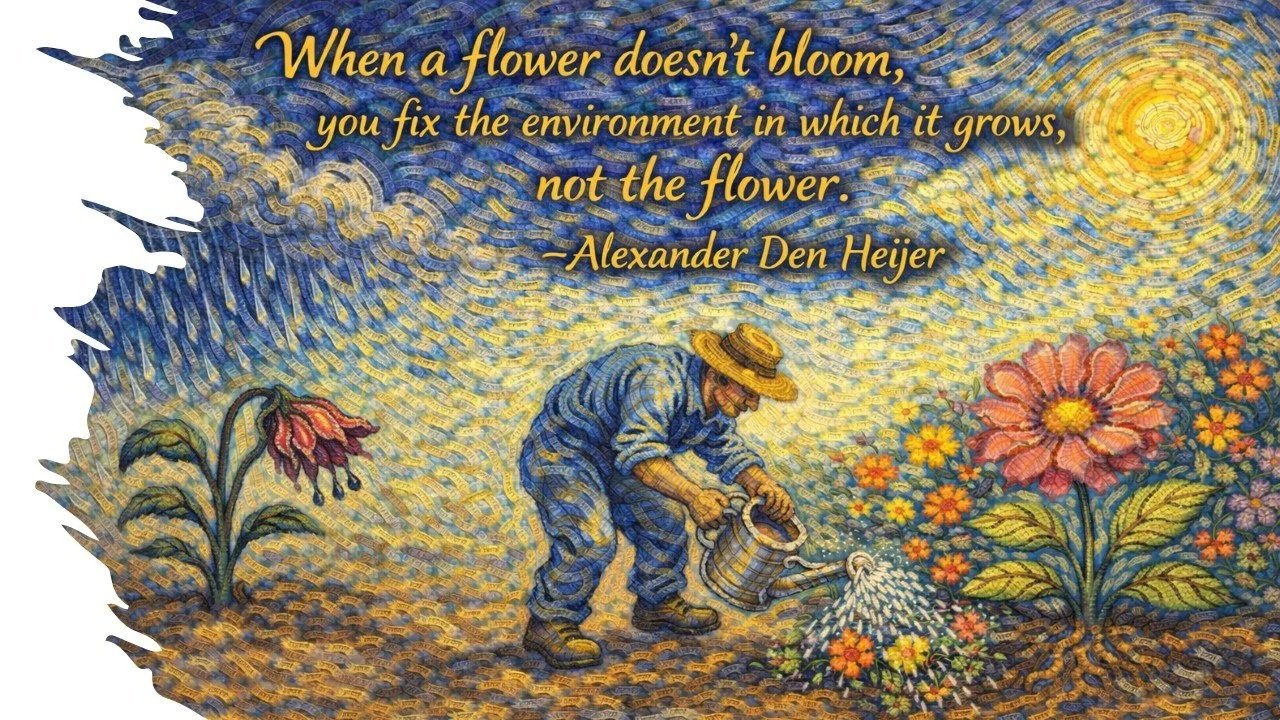
Image created by ChatGPT based on my prompts
Leaders endeavour to build organizational culture. Mission statements are written, values are laminated, and posters go up on walls. Nothing seems to change. The problem starts with the verb. You don't build culture. You nurture it.
The distinction matters because verbs reveal assumptions. Building implies construction, completion, and control. Building happens on a timeline with defined milestones. You build a house, finish it, and move in. Building culture suggests you can architect the organizational DNA, roll it out, and declare victory.
Culture doesn't work that way. The world of entertainment provides interesting and understandable examples.
Consider the case of Avatar. James Cameron's 2009 film became the highest-grossing movie of all time, held that record for a decade, and spawned multiple sequels. Yet Avatar left almost no cultural footprint. No fan fiction communities emerged. No conventions celebrate it. Many struggle to name the main characters or remember the plot. The Indiana Jones and Jurassic Park franchises are massive commercial successes that never generated the sustained voluntary engagement that defines cultural staying power.
Compare these to Star Trek. Gene Roddenberry's vision premiered in 1966 to mediocre ratings and cancellation after three seasons. The show should have disappeared into television history. Instead, fans kept it alive through conventions, fan fiction, and relentless advocacy. That grassroots energy eventually produced 12 television series with nearly 1,000 episodes, 14 films, and a fandom that spans six decades. When you add in fan fiction, fan films, comic books, and video games, the scale becomes immense.
No one built Star Trek culture. Fans nurtured it through voluntary, sustained engagement. They didn't just consume content. They created it, debated it, reimagined it, and passed it to new generations. The franchise gave them something worth investing in emotionally; the fans created spaces where that investment could flourish.
The difference? Active, voluntary engagement over time.
Companies that have built a similar level of cultural engagement include Apple and Starbucks. The auto industry has a unique culture. People restore classic cars and flock to Detroit’s Woodward Avenue Dream Cruise.
Organizations that treat culture like a construction project miss this fundamental truth. You can't mandate engagement any more than Paramount could force people to write fan fiction. You can only create conditions where people choose to invest emotionally.
The gardening metaphor captures this better than the building metaphor. Gardens require constant care: feeding, weeding, pruning. You plant seeds knowing some won't germinate. You nurture what grows, remove what threatens the ecosystem, and accept that weather and seasons will affect results regardless of your effort.
Most importantly, gardens never finish. The moment you stop tending them, they start reverting to wild growth or dying back. Culture works the same way.
This means culture isn't a thing you create and complete. It's a process requiring constant attention. Merriam-Webster defines culture as "the set of shared attitudes, values, goals, and practices that characterizes an institution or organization." Notice the verb is "characterizes," not "was built by" or "was designed to." Culture emerges from what people actually do, not what posters say they should do.
The Cambridge Dictionary adds another dimension: "the attitudes, behavior, opinions of a particular group of people within society." Culture is collective and behavioral. It lives in daily actions, not in statements of aspiration.
This creates a fundamental challenge for leaders: you can't directly build what emerges from thousands of daily interactions you'll never observe. You can only influence the conditions that shape those interactions.
Some organizations get this. They understand their job is creating environments where the right cultural behaviors can take root and grow. They focus on systems, incentives, and modeling rather than campaigns and slogans.
They know culture change happens slowly, through the accumulation of small, consistent actions rather than transformative initiatives. They measure culture through behaviors and outcomes rather than survey scores. They accept that culture will evolve whether they want it to or not, so their job is guiding that evolution toward productive ends.
The question isn't whether you're building the culture you want. The question is whether you're creating conditions for the culture you want to emerge and sustain itself.
Are you feeding behaviors that support your stated values? Are you weeding out contradictory practices? Are you pruning organizational structures that no longer serve? Are you patient enough to let roots take hold?
Most critically: are your stakeholders emotionally invested? This includes not just shareholders, but employees, customers, partners, and the communities they operate in. Culture sustained by genuine belief persists through leadership transitions and market upheavals.
The entertainment franchises that endure understand this instinctively. They give fans something worth investing in emotionally, then create spaces where that investment can flourish. They don't try to control the culture. They tend the garden where culture grows.
Organizations would do well to learn the same lesson. Stop building. Start nurturing. The difference isn't semantic. It's fundamental to whether your culture initiative joins Avatar in forgettable irrelevance or Star Trek in lasting impact.
Related Articles
Does 'Avatar' Have No Cultural Footprint? A Statistical Analysis | Stat Significant
4 Ways to Build Durable Relationships with Your Most Important Customers | Harvard Business Review
State of the Consumer 2025: When disruption becomes permanent | McKinsey & Company
Chips And Salsa: Bite-Sized News and Posts
We need to be able to speak truth to power. This is how collaboration improves decisions. At some point, when the responsible person makes a decision, we have to execute. The only exceptions are those that require unethical or illegal action.
When You Have to Execute a Strategy You Disagree With | Harvard Business Review
I am troubled by the shift away from data driven decisions. We have the capacity to understand the universe and all of its glorious complexity and nuance. Not to use this ability is a sin. The more we know, the more amazing our universe becomes.
My wife and I lived this three times. We had to and are making end-of-life care decisions for my father, mother-in-law, and father-in-law. We have made plans to ensure that, when the time comes, the process is as easy as possible for our daughter. The author’s mother gave her a great gift.
Some thoughts on 2026.
Six-Chart Sunday – The Big Six for ‘26 | Bruce Mehlman's Age of Disruption
In some ways, the history of General Foods is the history of 20th-century conglomerates.
Forgotten Giant: General Foods | American Business History Center
I have written several articles about Warner Bros. Discovery. What I do not understand is why the board is leaving the CEO who led the company into the abyss in charge of the firm's future.
Warner Bros. Discovery’s board isn’t choosing a deal — it’s avoiding one | Fortune
Beware gray rhinos. The biggest gray rhino I have written about since 2024 – the federal debt. Ray Dalio has been doing the same.
Why we ignore obvious problems -- and how to act on them | TED
How Countries Go Broke: The Big Cycle In a 5-Minute Read | Ray Dalio
After 25 Years of Failed Leadership, the Bill is About to Come Due | The Leaders Journey
The Federal Debt: Decades of Absent Leadership | The Leaders Journey
An Example of Poor Analytics - The Federal Debt | The Leaders Journey
Quotes
“If you see someone without a smile, give them one of yours.”
Dolly Parton
“A leader is best when people barely know he exists, when his work is done, his aim fulfilled, they will say: we did it ourselves.”
Lao Tzu
“If you aim at nothing, you will hit it every time.”
Zig Ziglar
Join the conversation. Subscribe on LinkedIn, Medium, or Substack.
Leadership is the most important work we do—in business and in life. I've spent over 40 years working with leaders across more than 100 companies, and I'm still learning. These newsletters share my thoughts on leadership today and what we can learn.
I need your help making this better. What topics hit home? What misses the mark? What leadership challenges are you wrestling with right now? Send them my way.
Find The Leader With A Thousand Faces and other recommended books on my website.